Innovation in Smoking Cessation Research

Global Action’s charitable grantmaking supports research and pilot initiatives that promote the integration of tobacco harm reduction into clinical practices. We believe that all people who smoke deserve comprehensive information and support from their health care providers including the potential benefits of harm reduction.

Though the safest option of all is to forgo nicotine use entirely, those who smoke can significantly reduce their risk of death and disease by switching to reduced-risk nicotine products.

Our grantees in this space are conducting research and providing education on tobacco harm reduction in clinical settings or working directly with health systems to ensure that tobacco harm reduction is integrated into all forms of care. This work supports our charitable mission of advancing the field of tobacco harm reduction globally.  

FEATURED GRANTEES

Center for Health Research and Education

Global Action supports the Center for Health Research and Education (CHRE) program in the UK to integrate tobacco harm reduction into 75 Priory mental health sites across the country. These interventions will help Priory patients—80% of whom are from the National Health Service—work toward smoking cessation while receiving additional treatment. CHRE is working to train clinicians in tobacco harm reduction and improving patient access to reduced-risk nicotine products or other smoking cessation tools on their journeys to quit. 

ECLAT SLR

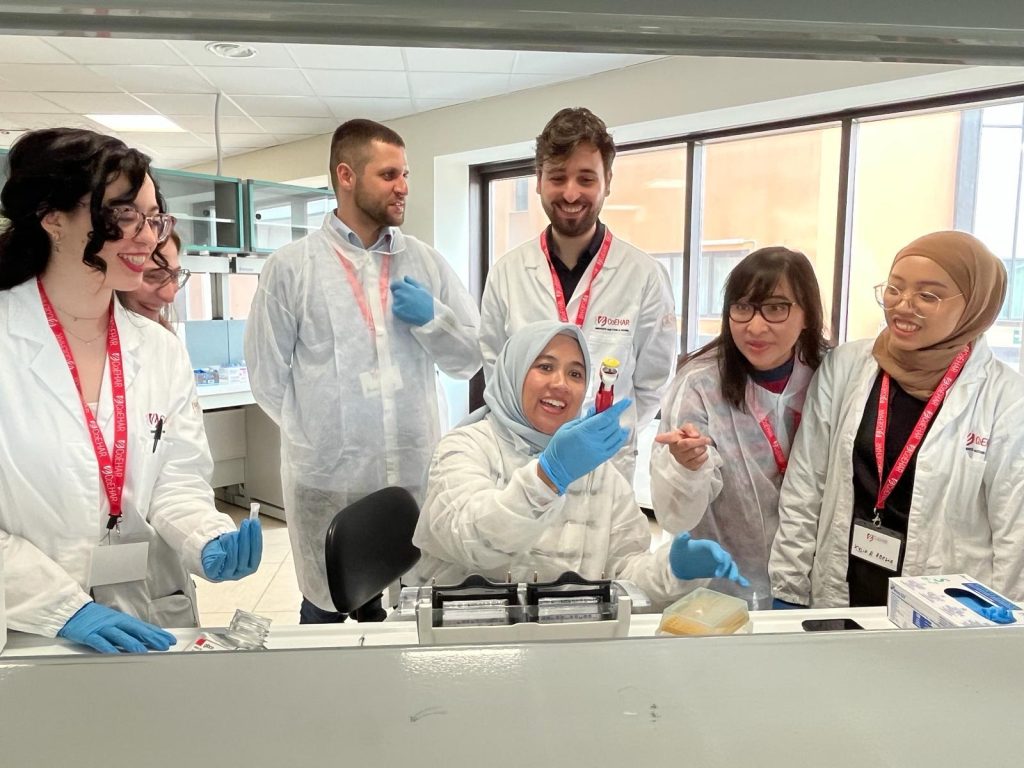
Global Action has supported The Center of Excellence for the Acceleration of Harm Reduction (CoEHAR) to conduct and support multidisciplinary scientific research programs and training related to tobacco harm reduction. Among these is a longitudinal study in Italy of people who use both combustible tobacco cigarettes and electronic nicotine delivery systems to assess the effect of different dual use patterns on toxin exposure and risk. 

Rose Research Center

With a grant from Global Action, the Rose Research Center is conducting studies on promising smoking cessation and nicotine harm reduction strategies through pilot studies and subsequent randomized, controlled clinical trials. Rose Research Center uses these results to develop tailored treatment approaches for people who smoke based on their smoking history, psychological characteristics, and initial response to treatment.  

In addition to clinical studies, Global Action provides funding for the Rose Research Center to conduct impactful research in cellular and in vivo models to more accurately model nicotine addiction and the effects of cigarette smoke on the brain’s neurochemical receptors. This research informs the development of smoking cessation tools that can target specific mechanisms in nicotine and tobacco addiction.